Smithsonite
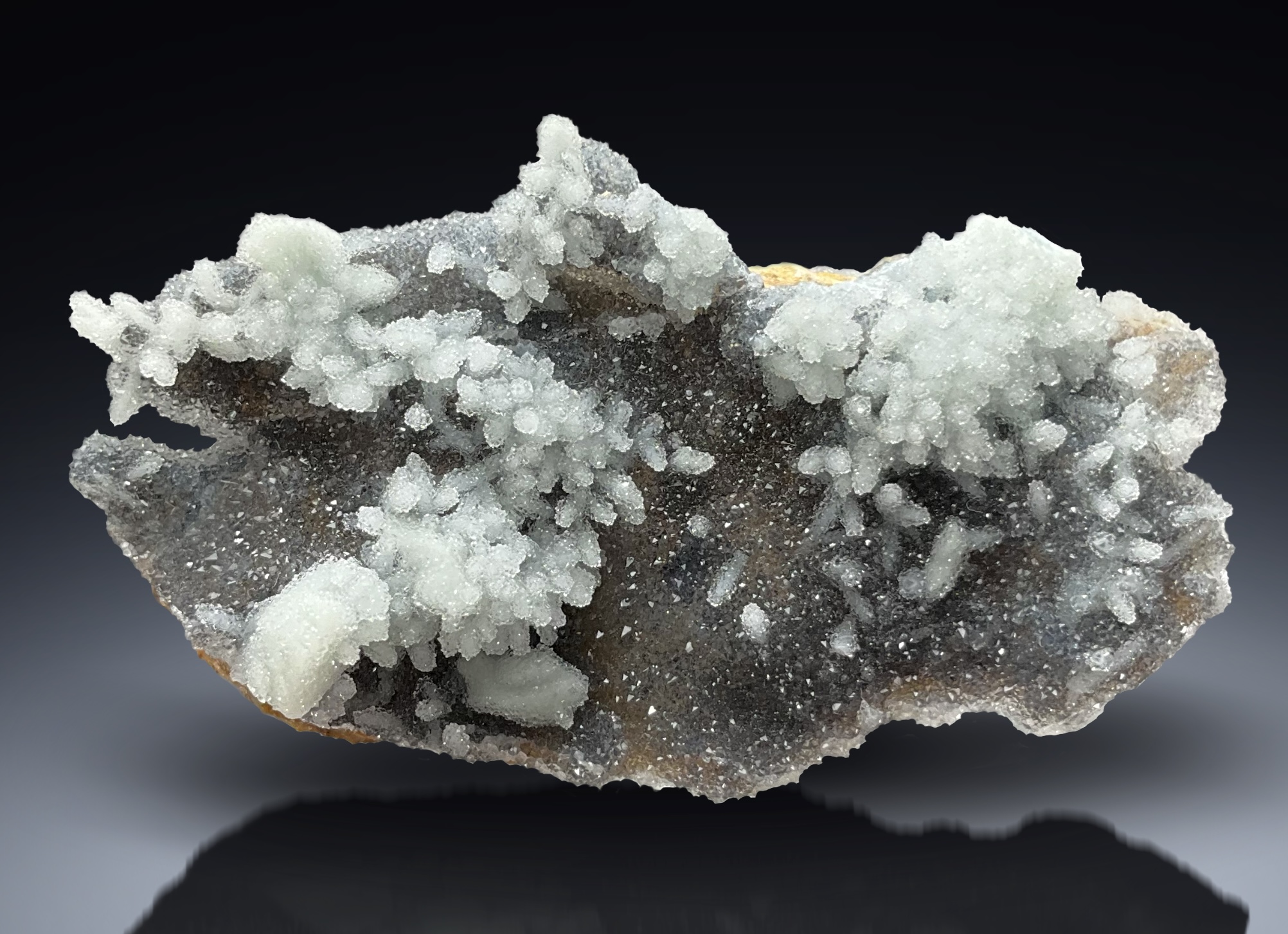
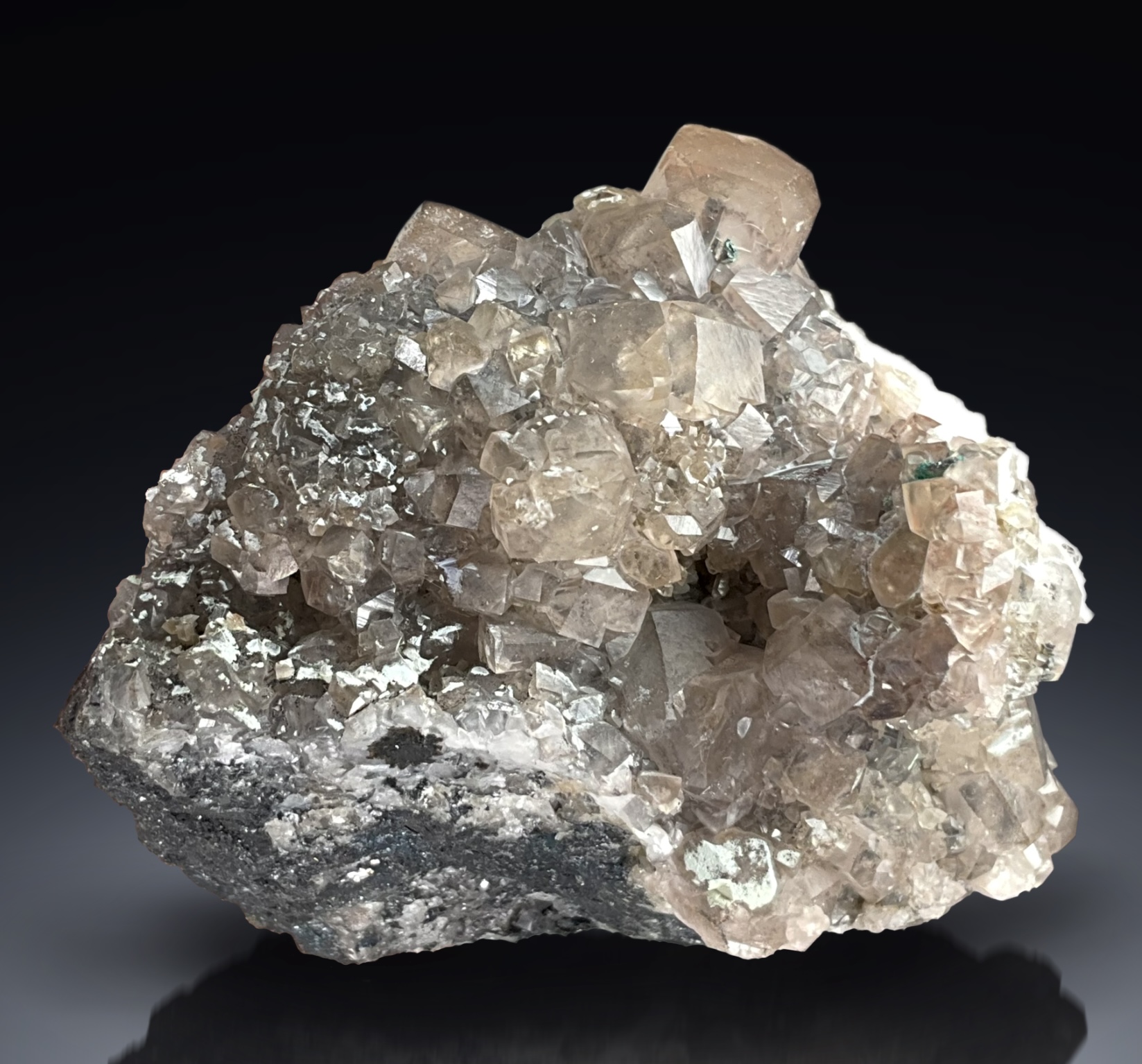
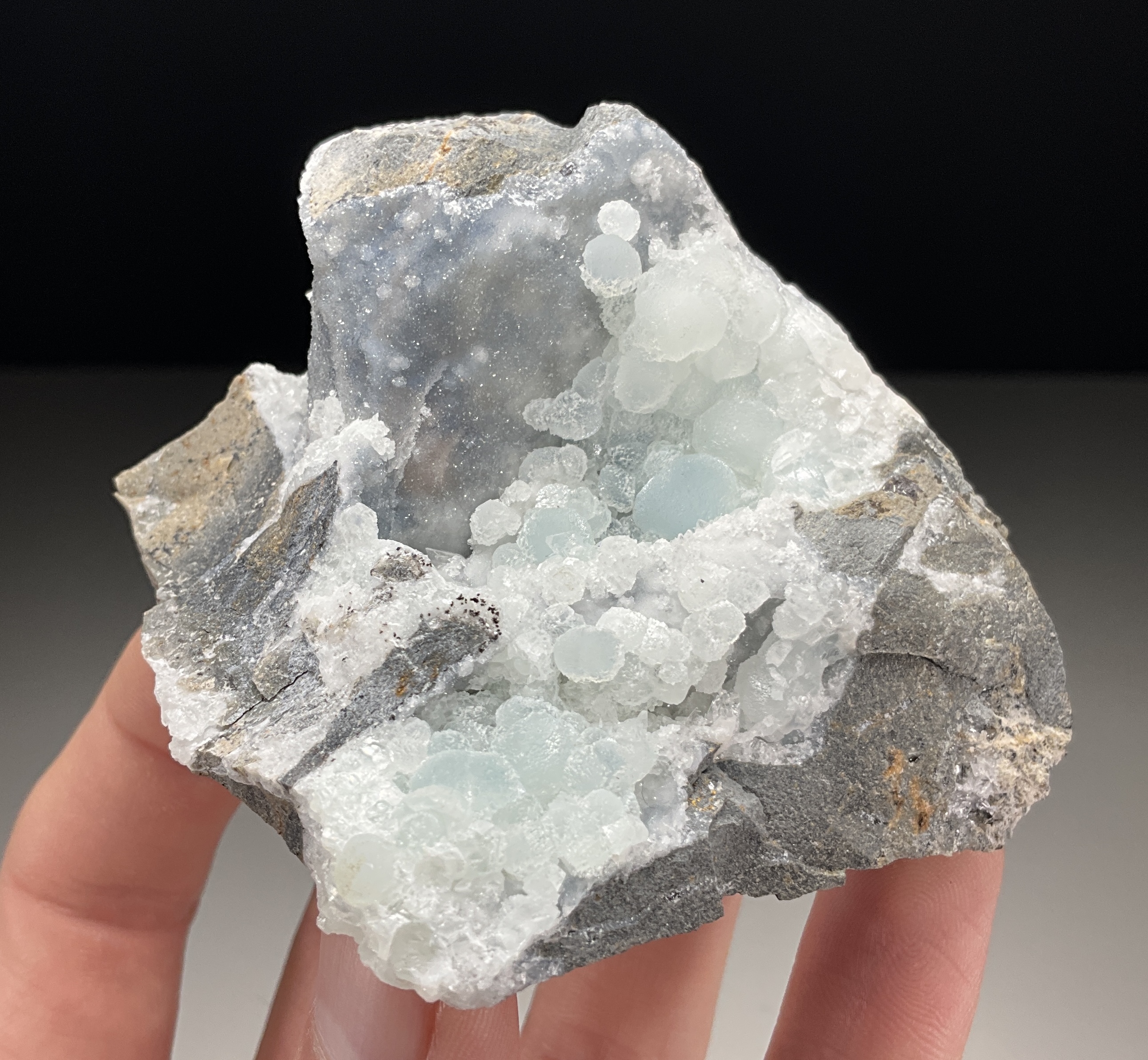
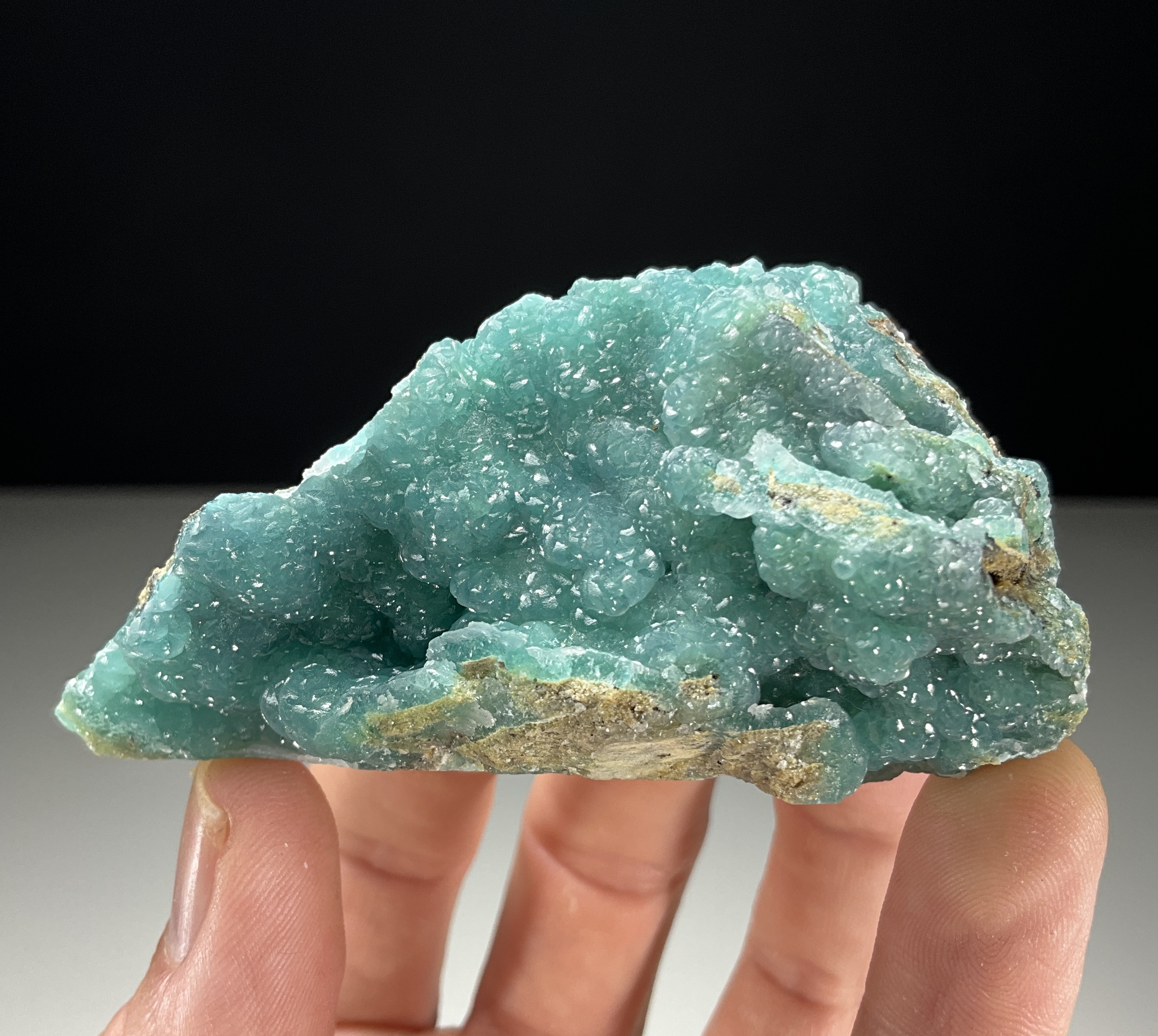
Smithsonite is a zinc carbonate mineral beloved by collectors for its smooth botryoidal surfaces and soft, luminous pastel colors — sky blue, mint green, rose pink, lavender, pale yellow, and warm cream. It is named in honor of James Smithson, the British mineralogist whose bequest founded the Smithsonian Institution.
Properties
| Property | Detail |
|---|---|
| Chemical Formula | ZnCO₃ |
| Crystal System | Trigonal (rhombohedral) |
| Mohs Hardness | 4–4.5 |
| Luster | Vitreous to pearly |
| Streak | White |
| Colors | Blue, green, pink, lavender, yellow, white, cream |
Occurrence
Smithsonite is a secondary mineral found in the oxidized zones of zinc-bearing ore deposits. It forms by the alteration of sphalerite (zinc sulfide) in the presence of carbonate-rich groundwater. The color variations come from trace substitutions of other elements:
- Blue – Copper substitution
- Green – Copper or cadmium
- Pink / Rose – Cobalt substitution
- Yellow – Cadmium
- Purple / Lavender – Cobalt or iron
- White / Colorless – Pure ZnCO₃
Notable Localities
- Kelly Mine, Magdalena, New Mexico, USA – One of the world's benchmark localities for blue and green smithsonite. Exceptional botryoidal specimens with a distinctly "wet" appearance.
- Tsumeb, Namibia – Produces a wide range of smithsonite colors, including blue, green, and colorless, often in superb crystal habit.
- Broken Hill, New South Wales, Australia – A historic mining district known for good-quality smithsonite specimens.
- Laurion, Greece – Ancient silver mines that also produced interesting secondary mineral assemblages including smithsonite.
- Sardinia, Italy – Well-known for colorful smithsonite specimens, particularly pink and yellow material.
- Spain (Santander region) – Productive source of smithsonite in various colors.
Botryoidal Form
Most collector smithsonite is botryoidal — meaning it forms rounded, grape-like or kidney-shaped masses with a smooth, lustrous surface. This form catches light beautifully and gives the mineral its characteristic smooth, almost wet-looking surface. Well-developed scalenohedral crystals are rarer and particularly prized.
Collecting Tips
- Color is king. Deep blue, vivid green, and cobalt pink smithsonite specimens command significant premiums. The intensity and consistency of color is the primary value driver.
- Surface condition. Botryoidal smithsonite is delicate. Chips in the surface or damaged botryoids significantly reduce display quality. Examine edges carefully.
- Locality provenance. Smithsonite from named localities — especially Kelly Mine and Tsumeb — carries premium value and collectibility.
- UV fluorescence. Some smithsonite fluoresces under UV light; this can be an added bonus when selecting specimens.
- Associations. Smithsonite sometimes occurs with hemimorphite, malachite, azurite, or limonite, creating multi-mineral specimens with interesting contrast.
Care & Storage
Smithsonite is moderately soft (Mohs 4–4.5) and can scratch or chip. Store padded and separated from harder minerals. Do not clean with acid — it will dissolve the surface. Use a soft dry brush to remove dust. Avoid high humidity environments for long-term storage.
Browse Smithsonite Specimens
Mineral Kingdom regularly acquires smithsonite specimens from established localities. View available smithsonite listings in our shop to find the color and form you are looking for.