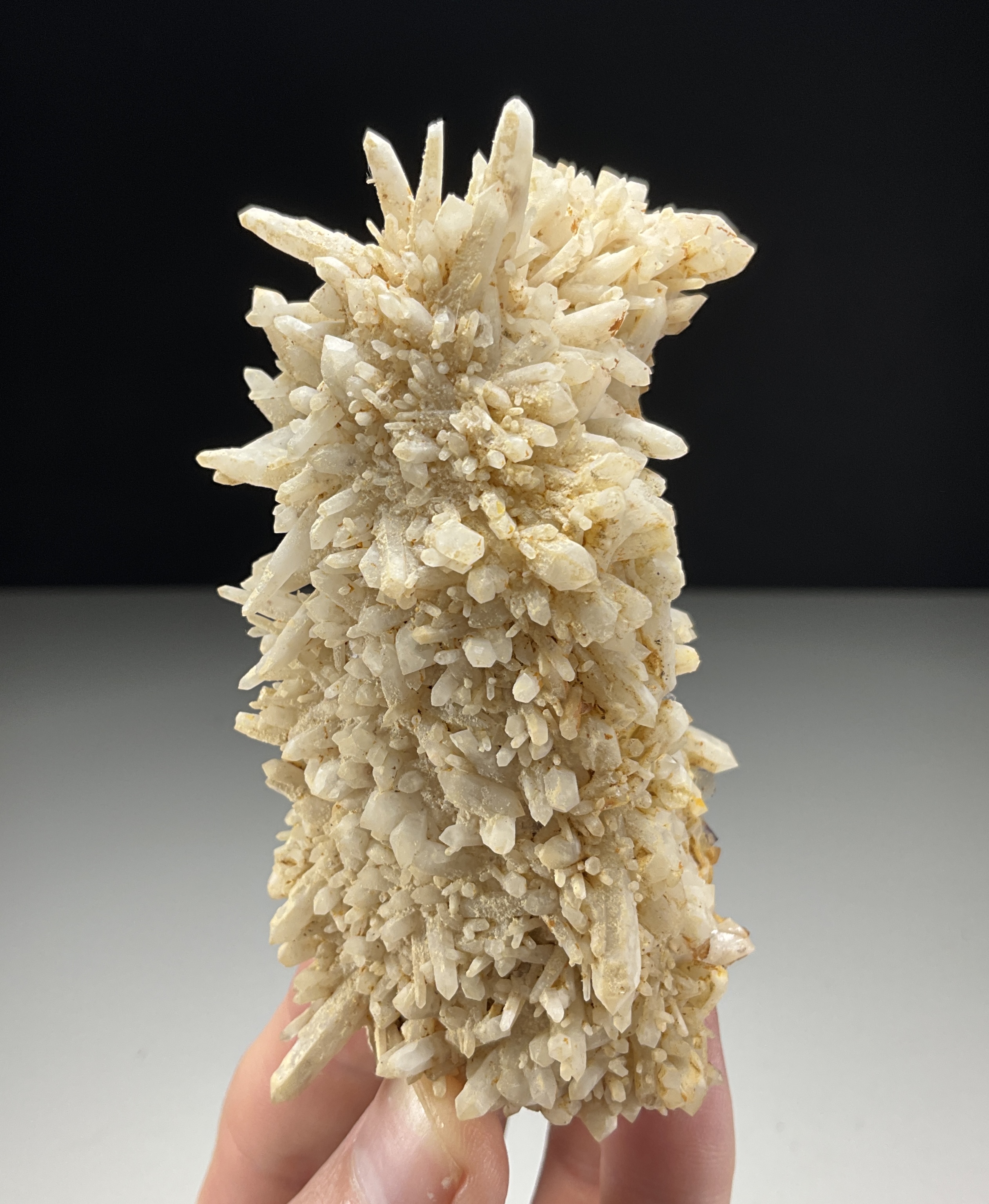
Fluorite
Fluorite is frequently called "the most colorful mineral in the world," and for good reason. A single locality can produce specimens in purple, blue, green, yellow, pink, and colorless — sometimes all within one crystal. Fluorite is a collector's mineral in every sense: beautiful, abundant, and endlessly varied.
Properties
| Property | Detail |
|---|---|
| Chemical Formula | CaF₂ |
| Crystal System | Cubic (isometric) |
| Mohs Hardness | 4 |
| Luster | Vitreous |
| Streak | White |
| Colors | Purple, blue, green, yellow, pink, colorless, multi-color |
Crystal Forms
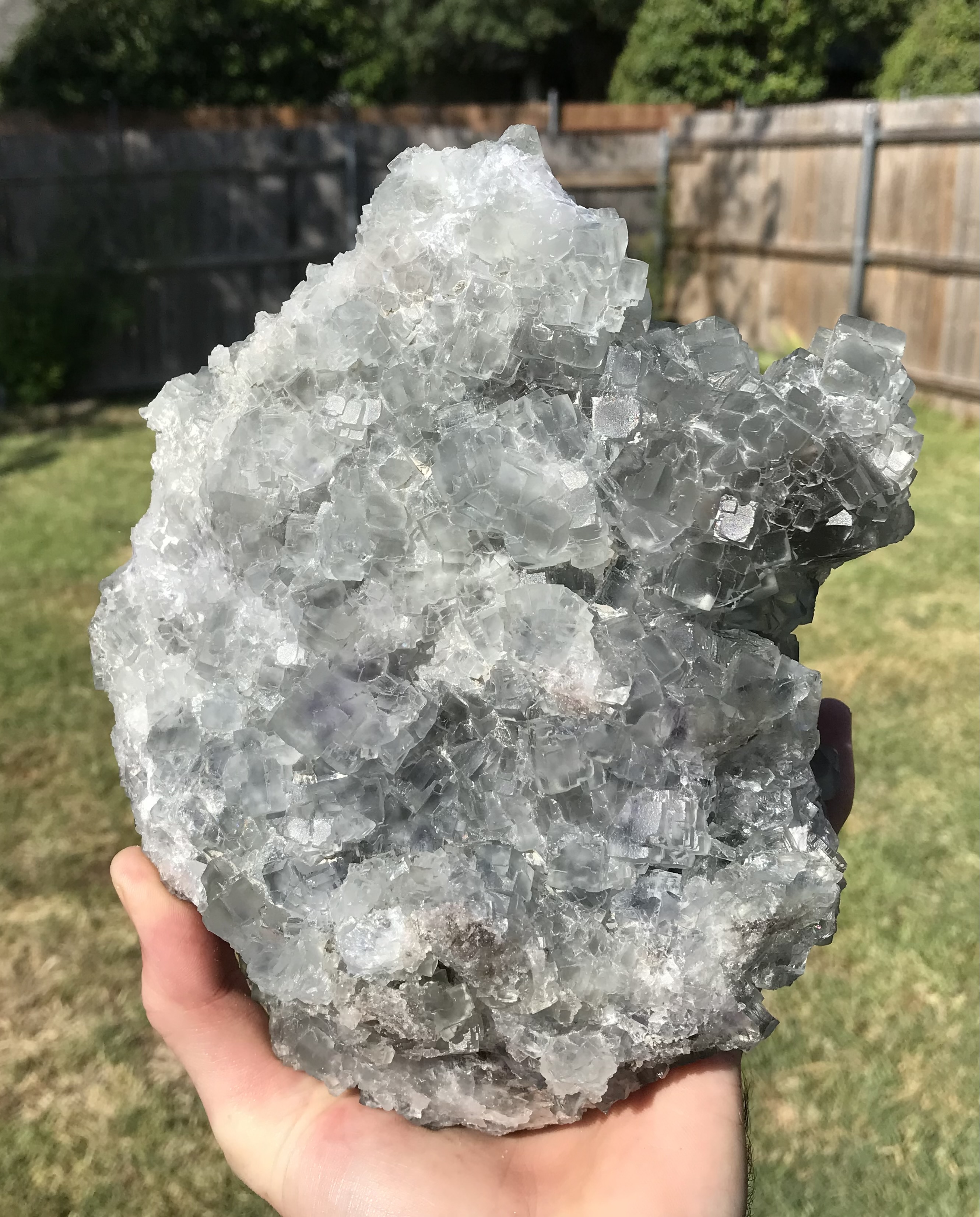
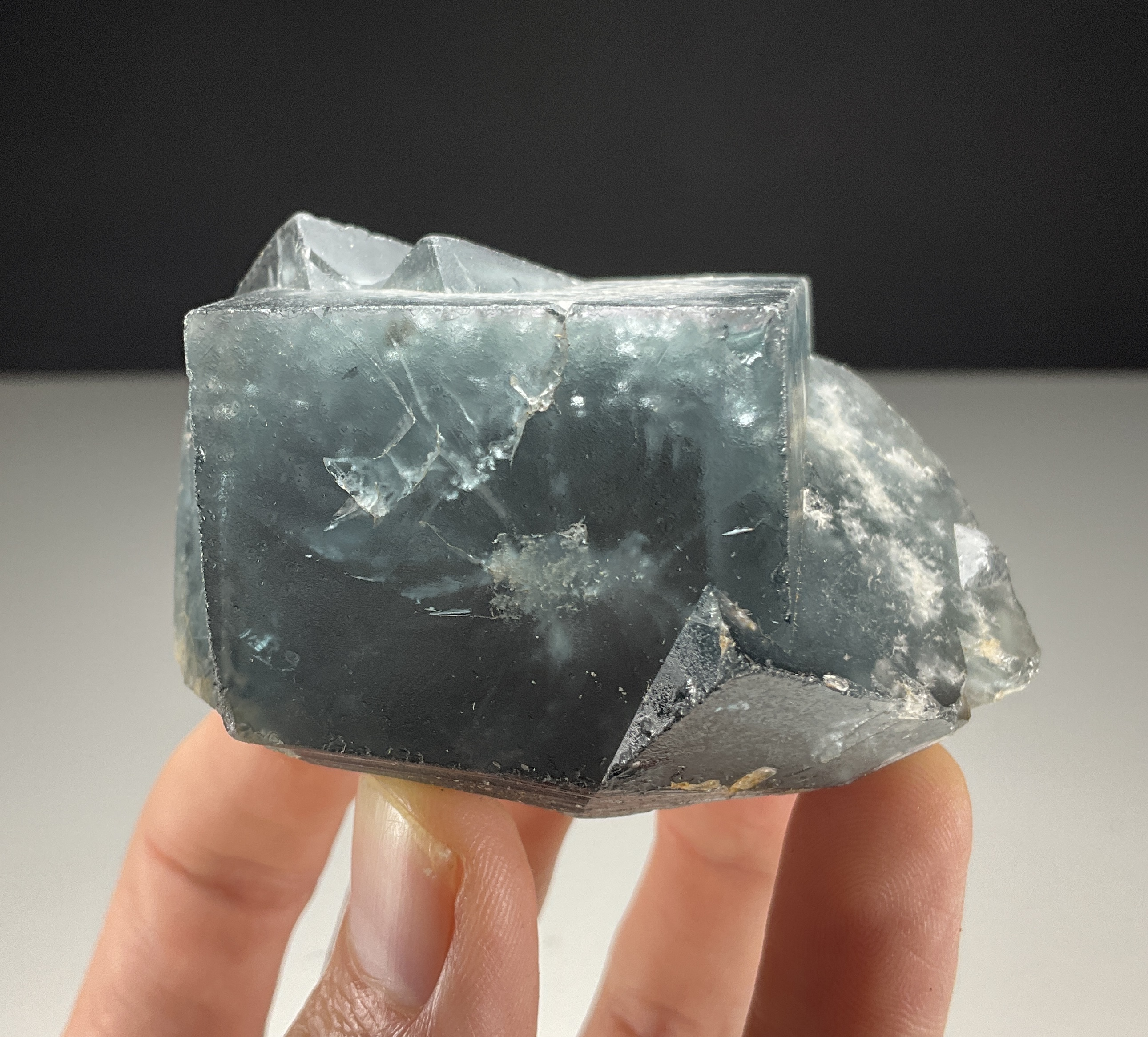
Fluorite most commonly forms cubes and octahedra, often with perfect octahedral cleavage. Interpenetrant twins — two cubes grown through each other — are a particularly beautiful form. Modified cubes with truncated corners are also common.
Where It's Found
- Cave-in-Rock, Illinois, USA – One of the most famous fluorite localities in the world. Famous for large, gemmy purple and yellow cubes, sometimes on dolomite matrix.
- Rogerley Mine, County Durham, England – Produces unusually vibrant green, daylight-fluorescent fluorite in stepped cubic crystals. Highly sought by collectors worldwide.
- Hunan Province, China – A major source of colorful fluorite, producing blue, purple, and green crystals in a wide range of habits.
- Namibia – Known for exceptional green fluorite crystals, often with remarkable clarity.
- Mexico – Multiple localities yield purple, blue, and green specimens, including the famous Naica Mine (known for massive selenite but also fine fluorite).
- Germany (Eifel region) – Historically produced fine green fluorite crystals.
Fluorescence
Fluorite gave fluorescence its name. Many specimens (though not all) glow brilliantly under shortwave or longwave UV light — commonly blue-violet, but sometimes cream, green, or red depending on the locality and trace elements. A UV lamp adds an extra dimension to any fluorite display.
Color Zoning
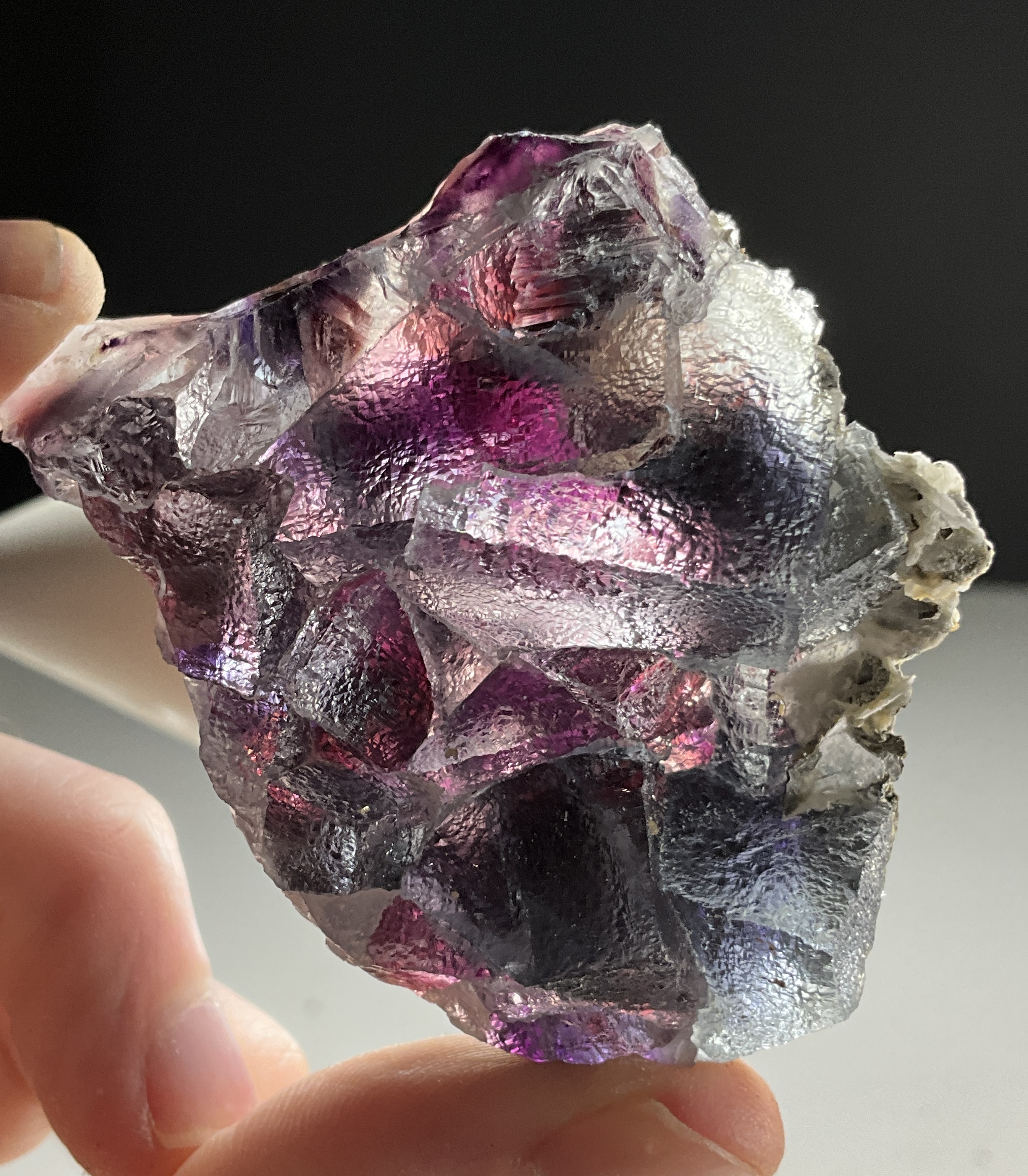
One of fluorite's most fascinating characteristics is color zoning — bands or sectors of different colors within a single crystal, recording changing chemical conditions during growth. Cubes with a purple core and clear outer zone are particularly striking.
Collecting Tips
- Cleavage caution. Fluorite has perfect octahedral cleavage in four directions. It cleaves easily if dropped or knocked. Handle with care.
- UV lamp. Test specimens with a UV lamp; dramatic fluorescence can add significant display and value interest.
- Locality matters. Fluorite collectors often organize by locality. Cave-in-Rock, Rogerley, and Hunan specimens are particularly sought-after on the secondary market.
- Color zoning. Look for specimens showing distinct color zones — they tell a geological story and are visually compelling.
- Phantoms. Like quartz, fluorite can show phantom growth zones in different colors.
Care & Storage
Fluorite has a Mohs hardness of 4, making it relatively soft. Protect it from harder minerals in storage and display. Avoid strong acids (fluorite dissolves in sulfuric acid). Clean with a soft brush and warm water; avoid prolonged water soaking.
Browse Fluorite Specimens
Mineral Kingdom regularly features fluorite specimens from multiple localities. View available fluorite listings in our shop to find the colors and localities that interest you most.