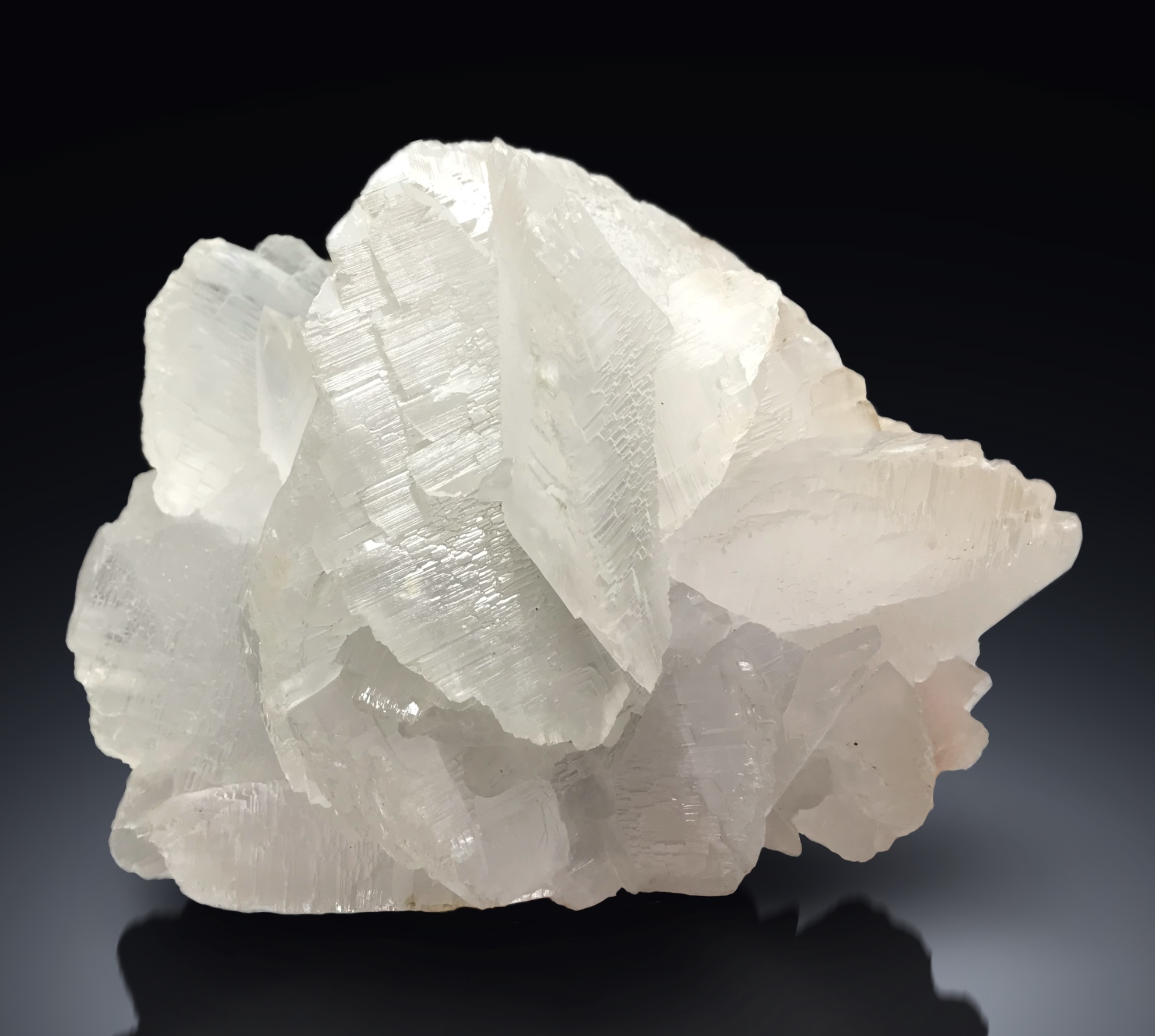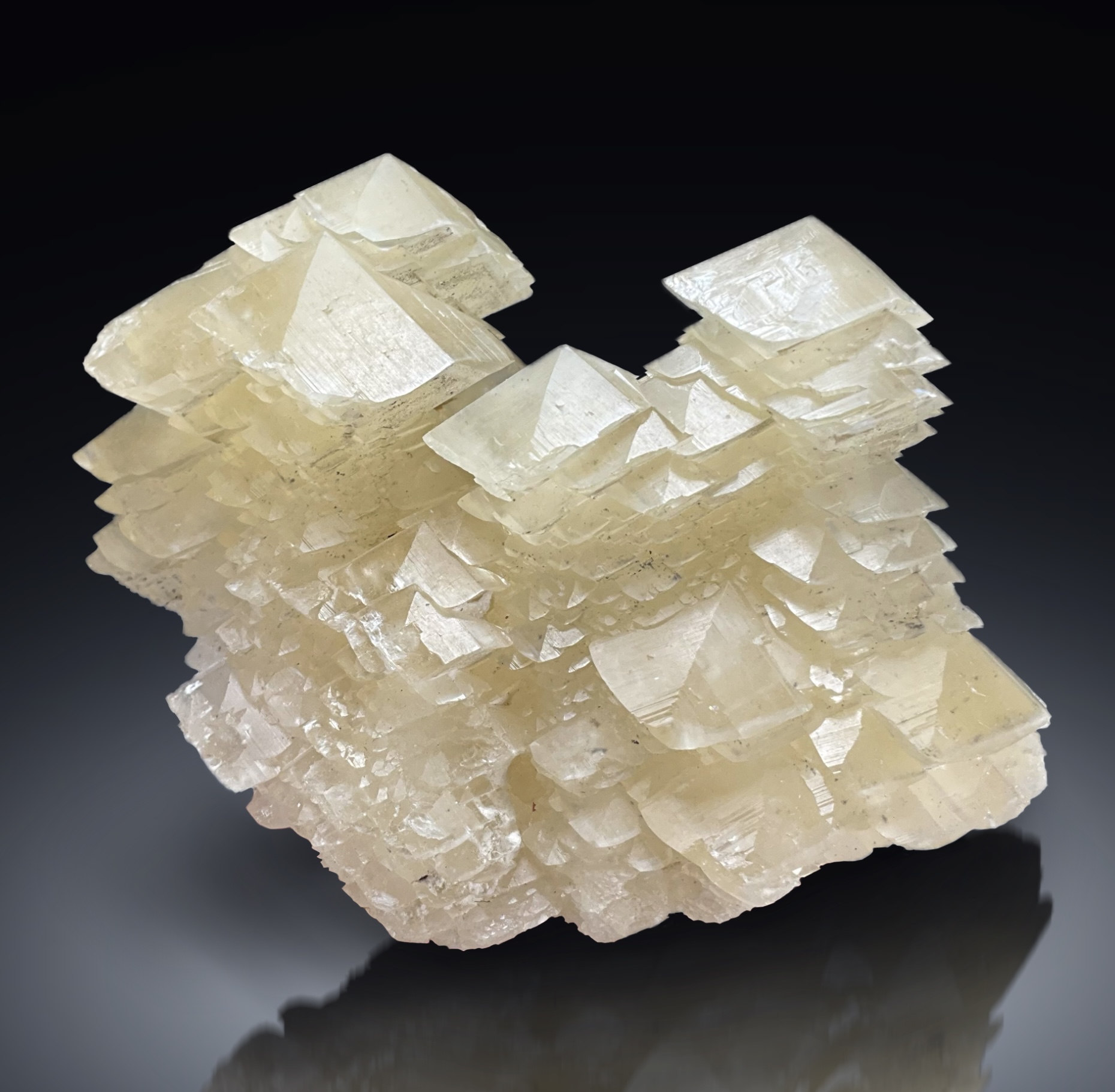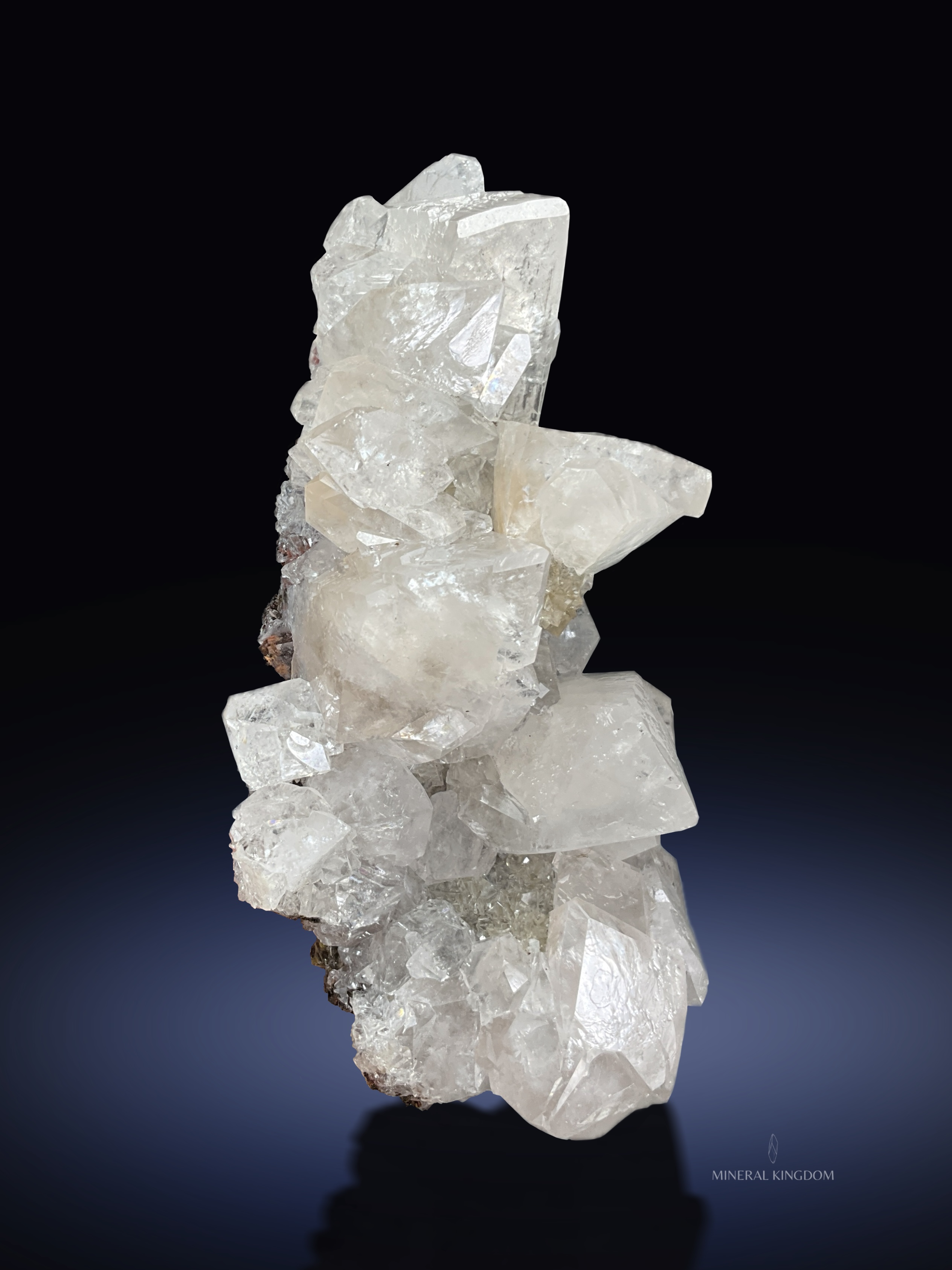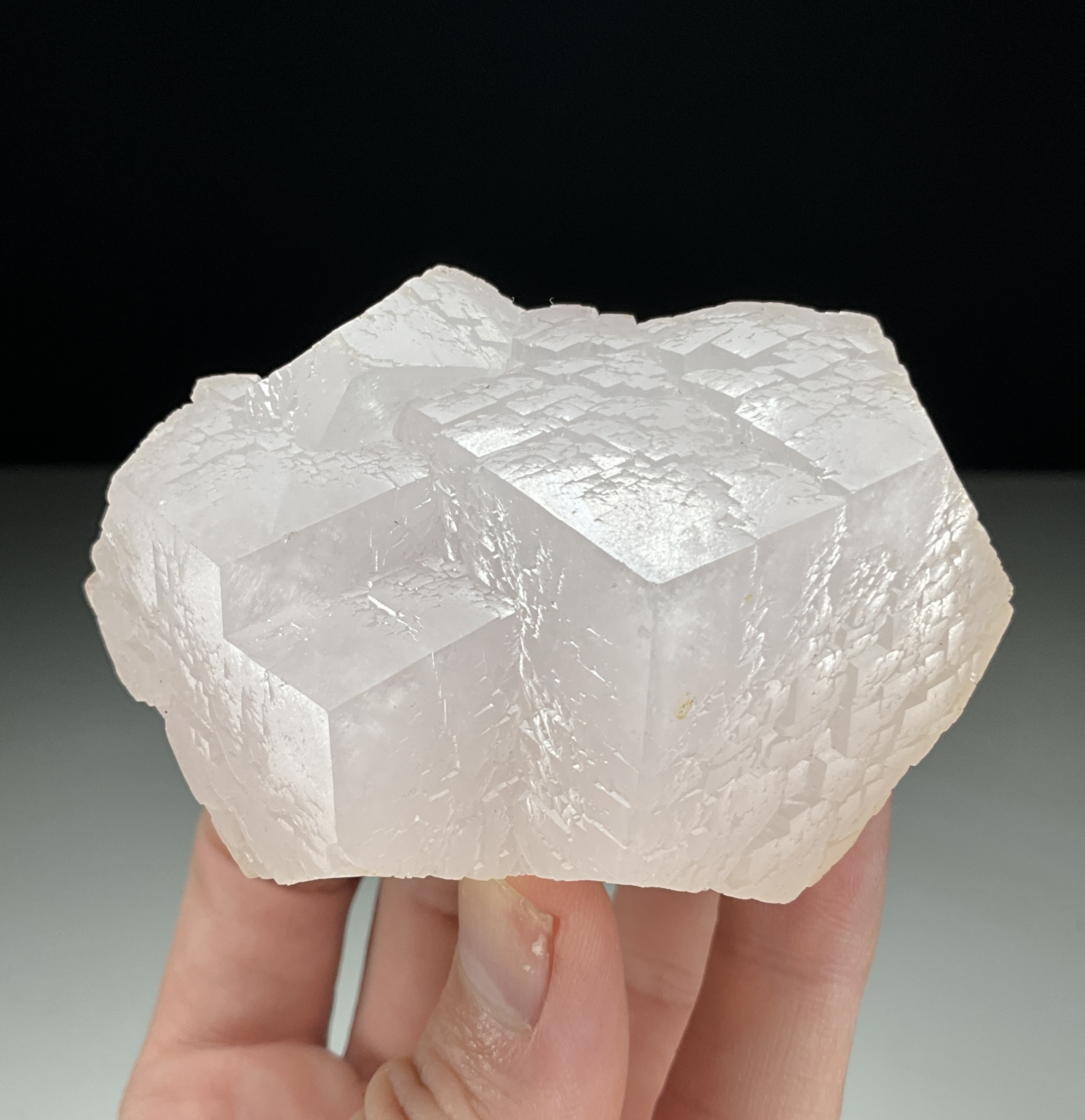
Calcite
Calcite is the defining mineral of limestone and marble, the foundation of coral reefs, and a major component of most sea shells and cave formations. It is also one of the most diverse collector minerals on the planet — forming in more than 300 documented crystal habits and occurring in a spectacular range of colors, localities, and associations.
Properties
| Property | Detail |
|---|---|
| Chemical Formula | CaCO₃ |
| Crystal System | Trigonal (rhombohedral) |
| Mohs Hardness | 3 |
| Luster | Vitreous to pearly |
| Streak | White |
| Colors | Colorless, white, yellow, pink, orange, blue, green, gray |
| Special Property | Strong double refraction (birefringence) |
Crystal Habits
Calcite grows in an astounding variety of forms:
- Rhombohedra – Has six faces that are all rhombuses
- Scalenohedral (dogtooth calcite) – Tall, pointed crystals in stellar clusters
- Nailhead calcite – Flat-topped crystals with a distinct disc shape
- Iceland spar – Large, perfectly cleaved colorless rhombs (a rhombohedral habit) displaying remarkable double refraction
- Stalactites and stalagmites – Cave formations composed almost entirely of calcite
- Manganocalcite – Pink to rose calcite colored by manganese impurities
Where It's Found
Calcite is found globally, but notable localities include:
- Chihuahua, Mexico – Produces excellent golden and orange scalenohedral crystals and beautiful manganocalcite.
- Tsumeb, Namibia – A legendary polymetallic deposit that has yielded extraordinary calcite crystals in association with rare secondary minerals.
- England (Peak District, Yorkshire) – Classic dogtooth and twinned calcite in lead-mine gangue material.
- Iceland – Source of "Iceland spar," large, optically clear calcite crystals historically used in Nicol prisms.
- Tennessee and Missouri, USA – Mississippi Valley-type lead-zinc districts produce excellent calcite crystals, often associated with sphalerite and galena.
- Peru – Pink manganocalcite and colorful cobaltocalcite are highlights of Peruvian mineral production.
Special Properties
Double Refraction (Birefringence): Clear calcite crystals placed over text will show two images — a striking demonstration of the mineral's strong birefringence. This property made Iceland spar historically important in the development of polarized light optics.
Reaction to Acid: Calcite fizzes vigorously in dilute hydrochloric acid, producing CO₂. This is the definitive field test for calcite versus other carbonates.
Fluorescence: Many calcites fluoresce — some brilliantly — in pink, orange, red, or blue under UV light.
Collecting Tips
- Crystal habit diversity. Collecting calcite by crystal form is a rewarding specialty within mineralogy. No two habits look alike.
- Association specimens. Calcite often grows with galena, sphalerite, pyrite, or fluorite. Combination specimens can be very attractive.
- Test for acid reaction. If you are uncertain whether a white carbonate mineral is calcite or another species, a drop of dilute HCl tells the story quickly.
- Softness. Mohs 3 means calcite scratches easily. Keep specimens isolated in storage.
Care & Storage
At Mohs 3, calcite is easily scratched. Keep it padded and separated from harder minerals. Never clean with acid — even mild acids will etch or dissolve the surface. Use only a soft dry brush or damp cloth. Avoid prolonged humidity, which can promote surface deterioration.
Browse Calcite Specimens
Mineral Kingdom stocks calcite specimens from a variety of localities and habits. View available calcite listings in our shop to find a form or color that completes your collection.